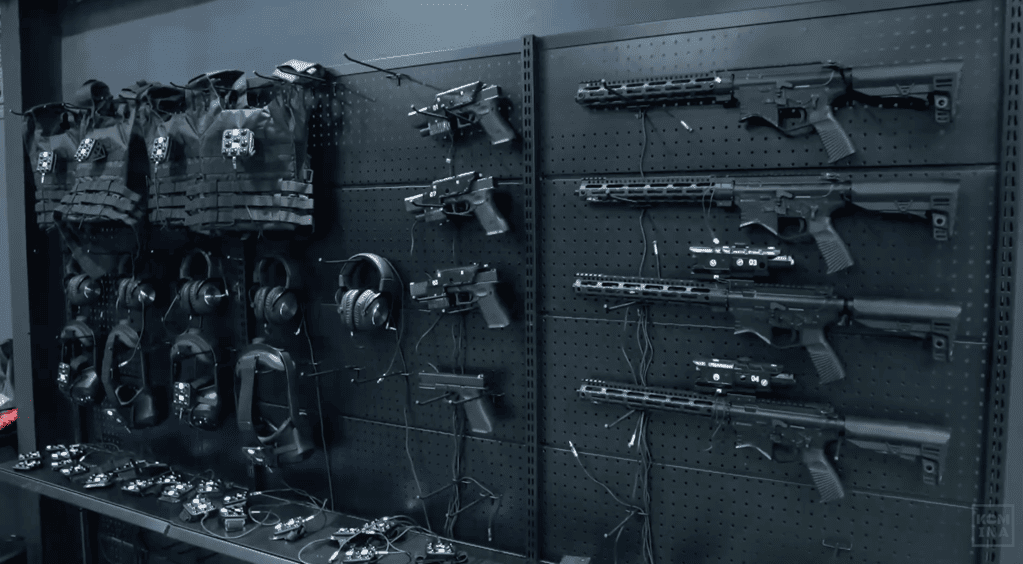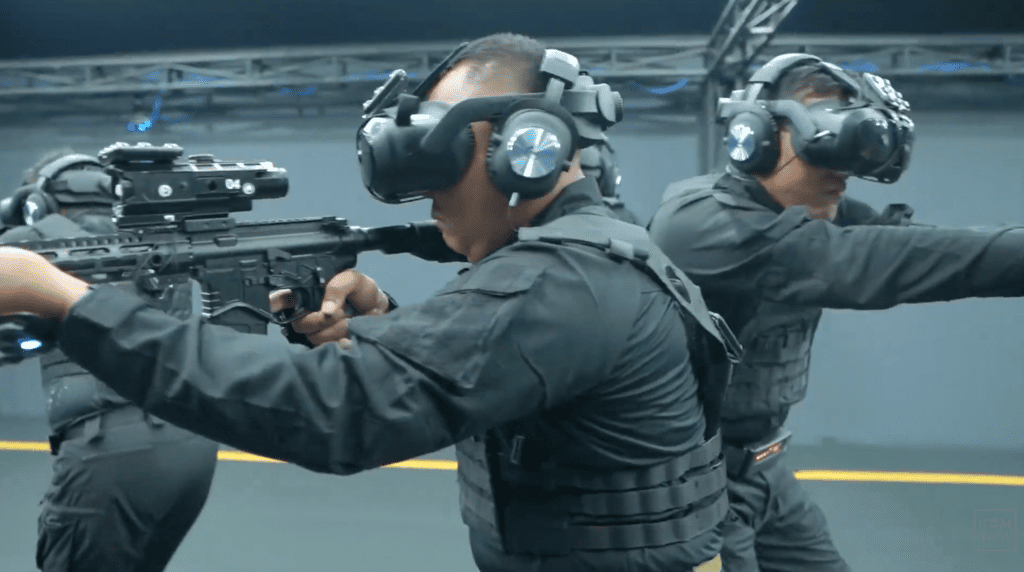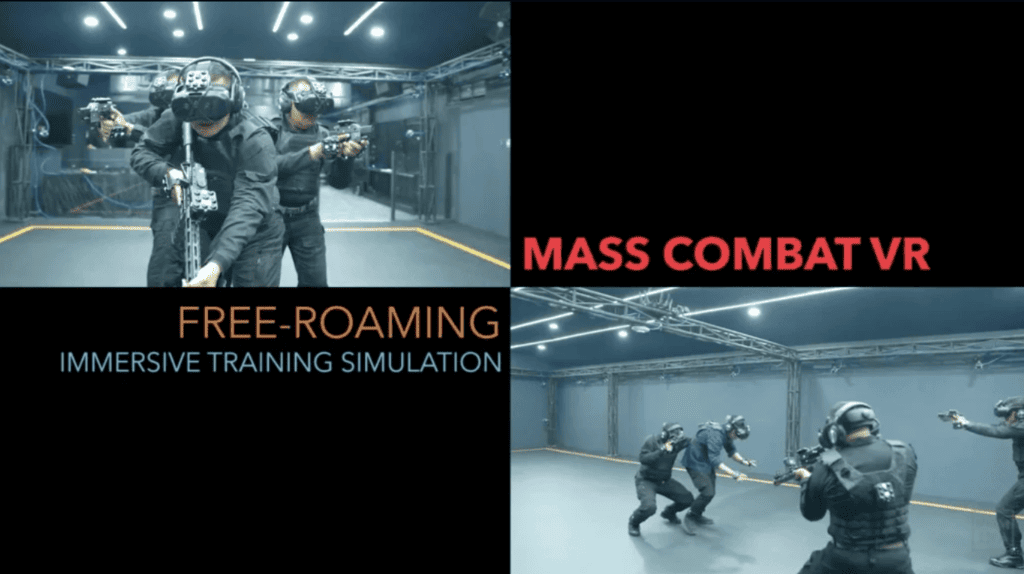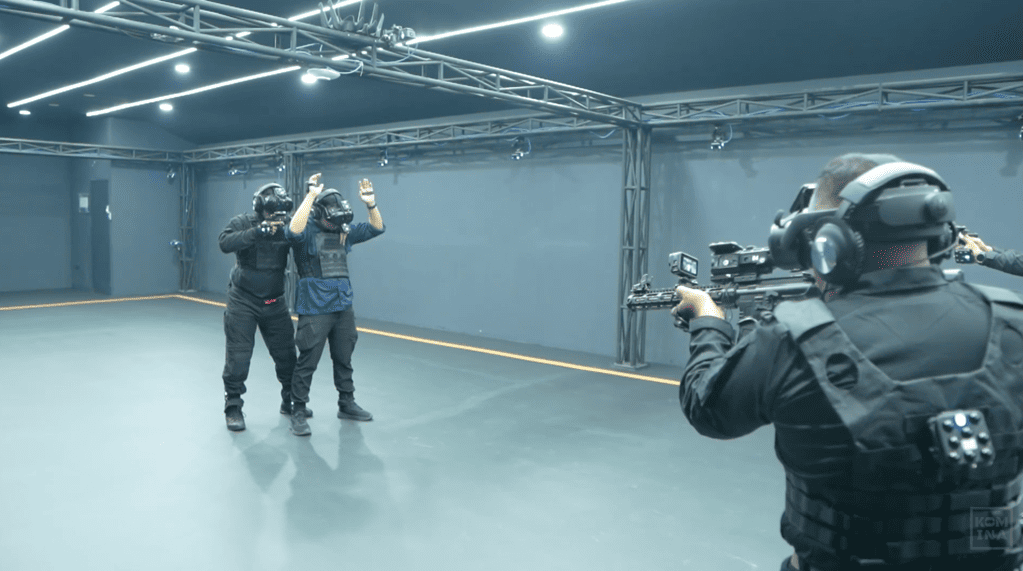
Hostage rescue sits at one of the most difficult points on the spectrum of tactical operations. Not just because of the technical complexity, but because of a tolerance for error that is essentially zero. A misidentified shot can mean the hostage who was supposed to be saved gets injured. Hesitation that runs too long can mean the threat finishes what they came to do. Every second carries consequence.
Training for this scenario in physical settings is genuinely hard. Mannequins don’t move, don’t panic, don’t use other hostages as shields. Human actors carry an injury risk that can’t be ignored in a realistic scenario. VR tactical training creates room to drill these scenarios at a level of variation and repetition that wasn’t reachable before. The five aspects below are the components that benefit most clearly from this approach.
1. Target Discrimination in a Fraction of a Second
This is the aspect that most often draws the line between a successful operation and a failed one. Hostages and threats can look very similar in low light, when one is half-concealed, or when both are moving fast. Operators have to make a fire-or-hold decision in a fraction of a second, with minimal margin for error.
VR makes it possible to drill this discrimination across nearly unlimited variations. An adult male hostage with a posture that resembles a threat. A woman forced to stand at the front as a shield. Children hiding under furniture whose movement reads like a threat. A perpetrator dressed like the other hostages to confuse operators. Every iteration brings a new profile that has to be recognized fast.
This kind of discrimination capability is hard to build with the limited number of scenarios that can be staged in a physical shoot house. VR opens up the volume of variation needed to form accurate identification reflexes.
2. Managing Communication With the Perpetrator
Many hostage rescue operations don’t end with shots fired. They end with negotiation that successfully resolves the situation. But even in scenarios that end with force, the early communication often shapes the tactical conditions when force is applied.
VR scenarios can include limited negotiation elements — perpetrators making demands, hostages communicating with operators through eye contact or gestures. Operators learn to manage information flowing in from multiple sources while holding their tactical position. This capability is very hard to train in a traditional shoot house where every “threat” is a stationary mannequin.
3. Coordination Across Teams With Different Approaches
Complex hostage rescue operations are rarely run by a single team. There’s usually an assault team entering from one point, a cover team securing the route, and a sniper team ready to provide support from a distance. Coordination across teams with different approaches determines the success of the operation.
Multi-team coordination drills in physical settings require many participants, large locations, and substantial logistics. In VR, every team can be in the same scenario with authentic radio communication, watching in real time what the other teams are doing. The coordination drill can run again and again with different variations — sniper teams that have to shift position, assault teams finding the route blocked, plan changes mid-operation as the situation evolves.
4. Decision-Making Under Time Pressure With Incomplete Information
Real operations rarely run according to the briefing. The initial information about the number of hostages turns out to be wrong. The building layout isn’t quite what the plan showed. The perpetrators turn out to be more numerous, or armed differently than reported. Operators and commanders have to keep adjusting the plan in the middle of an operation already in motion.
Drills for this kind of condition are difficult in physical scenarios because instructors have to prepare each variation in advance. In VR, variations can be triggered dynamically. The team has just entered the room and new information surfaces: the one hostage reported is actually three, the threat reported as unarmed turns out to be carrying an explosive device. Operators have to adapt within seconds.
This adaptability is often what separates good teams from exceptional ones, and drilling for it is hard to reach with conventional methods.
5. Post-Resolution Management
The part often forgotten in tactical training discussions: what happens after the threat is neutralized? Hostage extraction, area security, coordination with incoming medical and investigative teams, initial scene documentation. This phase is critical and complex, but rarely trained with the same depth as the assault phase.
Full VR scenarios can include the post-resolution phase as part of the drill. Operators learn not just to neutralize the threat, but to manage the situation afterward — traumatized hostages, wounded victims who need first aid, evidence preservation, the handover coordination with the follow-on team. The skill set that ultimately determines whether an operation succeeded, not just whether the threat was eliminated.
Operational Context in Indonesia
Hostage rescue scenarios in Indonesia carry their own characteristics that differ from foreign contexts. Critical locations — from crowded malls, public transportation, to religious facilities — have layouts and social dynamics specific to the country. Perpetrators with a local profile follow patterns of motivation and modus operandi that aren’t always identical to international typologies.
KOMINA develops VR scenarios that reflect this Indonesian context, from the layouts common in major cities to threat profiles aligned with domestic intelligence analysis. This local approach delivers value that’s hard to obtain by adopting foreign platforms with generic scenarios.
Closing
Hostage rescue remains one of the most demanding disciplines in the world of tactical operations. The minimal tolerance for error demands more than adequate training — the kind marked by high repetition, broad variation, and exposure to complexity that doesn’t follow a script. The five aspects above are the components that VR tactical training can deliver at a scale and quality that’s hard to achieve with physical training alone. Not to replace traditional training, but to strengthen the entire training cycle for scenarios where the consequences of getting it wrong can never be allowed to land.