In the high-pressure vacuum of Close Quarters Battle (CQB), a “good enough” performance is usually a casualty in waiting. When a stack forms on a threshold, the margin for error effectively hits zero. Room clearing isn’t just about raw aggression; it is about the surgical synchronization of movement, lines of sight, and immediate, unspoken communication.
For decades, the only way to master these mechanics was through expensive live-fire shoot-houses, logistical nightmares, and a massive burn of finite resources. It worked, but it never scaled. Today, the tide is shifting. Elite units are ditching the plywood for something far more agile. VR bebas bergerak is fundamentally rewiring squad coordination, providing a data-heavy alternative that yields field-ready results without the “range day” overhead.
Killing the “Training Scar”
The primary flaw of physical training facilities is the inherent bottleneck. You can typically only cycle one squad through a structure at a time, leading to hours of administrative downtime. Worse, physical structures are static. After three runs, operators begin memorizing door locations and furniture placement. They stop “clearing” and start “gaming” the layout.
Free-roam VR kills this habit. In a digital arena, an instructor can warp the geometry in seconds. A squad clears a cramped apartment, resets, and five minutes later, they are navigating a multi-level industrial labyrinth. This constant environmental flux forces operators to rely on their tactical fundamentals rather than a memorized floor plan. It ensures the focus remains on the skill, not the building.
The Biometrics of the Breach
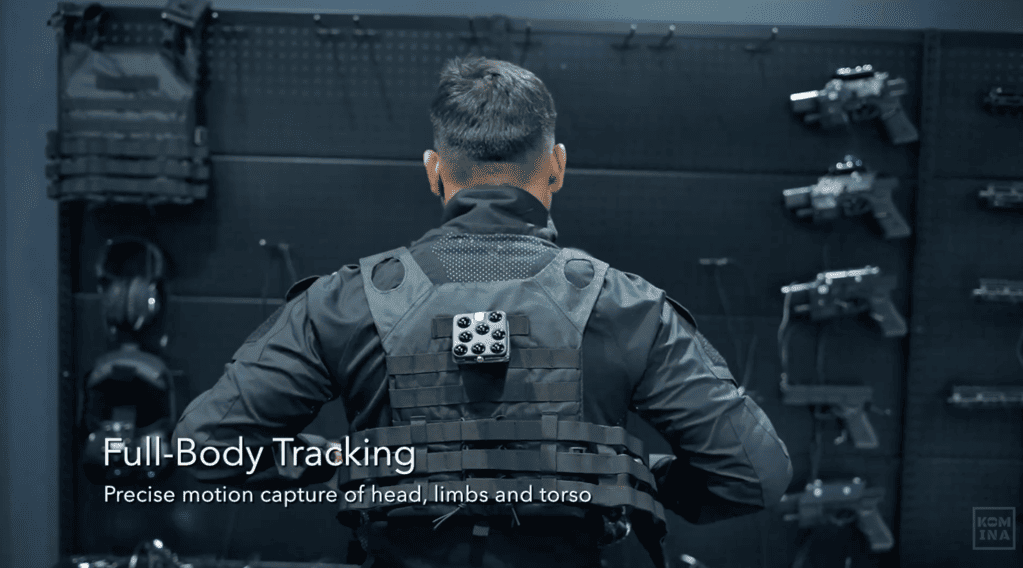
Critics used to dismiss virtual training as “gamified,” but that argument dies the moment you integrate full-body motion capture. In a professional KOMINA simulation, every pivot, “pie-slice,” and muzzle orientation is tracked with millisecond precision. If an operator flags a teammate or fails to check a deep corner, the system registers it instantly.
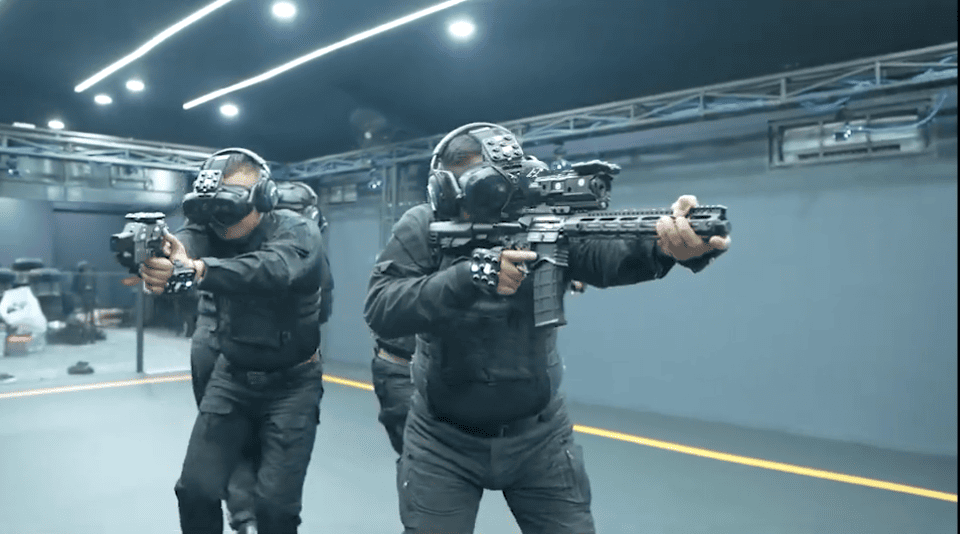
This isn’t about clicking buttons. Operators utilize modified airsoft platforms—weighted, balanced, and ergonomically identical to their actual service weapons. They aren’t holding plastic controllers; they are forging genuine muscle memory. To keep the stakes high, shockbelt haptics are integrated into the gear. If you get tagged, you feel it. This “pain-response” loop creates the necessary stress inoculation, punishing tactical laziness in a safe-to-fail theater.
The Death of Subjective Debriefing
In a traditional drill, an instructor’s feedback is only as good as what they happened to see in the chaos of a breach. They simply cannot be everywhere at once.
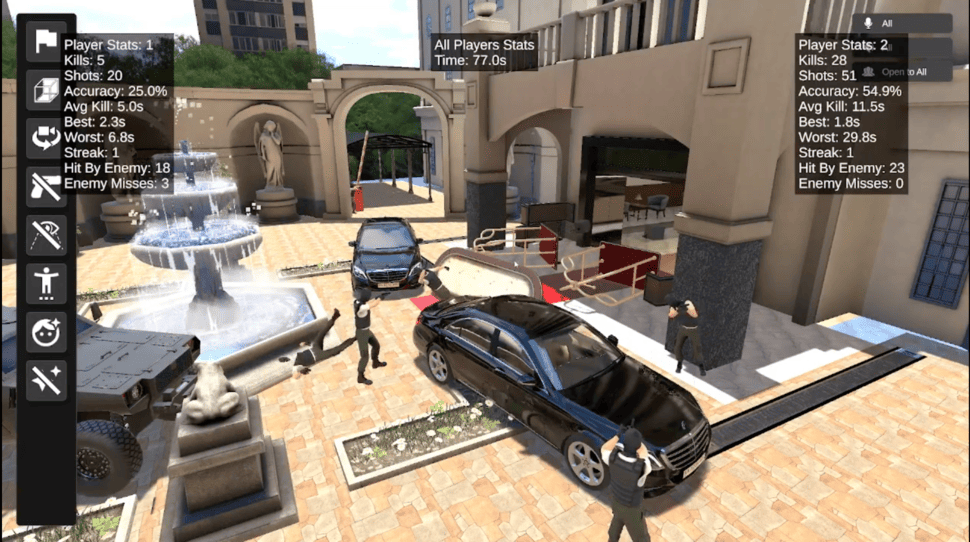
Free-roam VR removes this human blind spot. Every mission is followed by a forensic After-Action Review (AAR). You can rewind the tape, view the engagement from a “God-eye” perspective, and dissect movement heatmaps. Instructors can freeze the frame at the exact moment a breach collapsed and show the squad exactly where their “sectors of fire” overlapped or failed. It turns a subjective opinion into an objective, data-driven post-mortem.
For units requiring scalable, data-heavy training without the logistical anchor of live exercises, this technology has moved from “optional” to a mission requirement. To see how digital readiness is being forged in the modern era, visit KOMINA and explore the next evolution of tactical simulation.