


Introduction
Ask any defense commander what keeps them awake at night, and the answer is rarely about technology alone. It is about people. How they react. How they decide. How they perform when plans change and pressure rises.
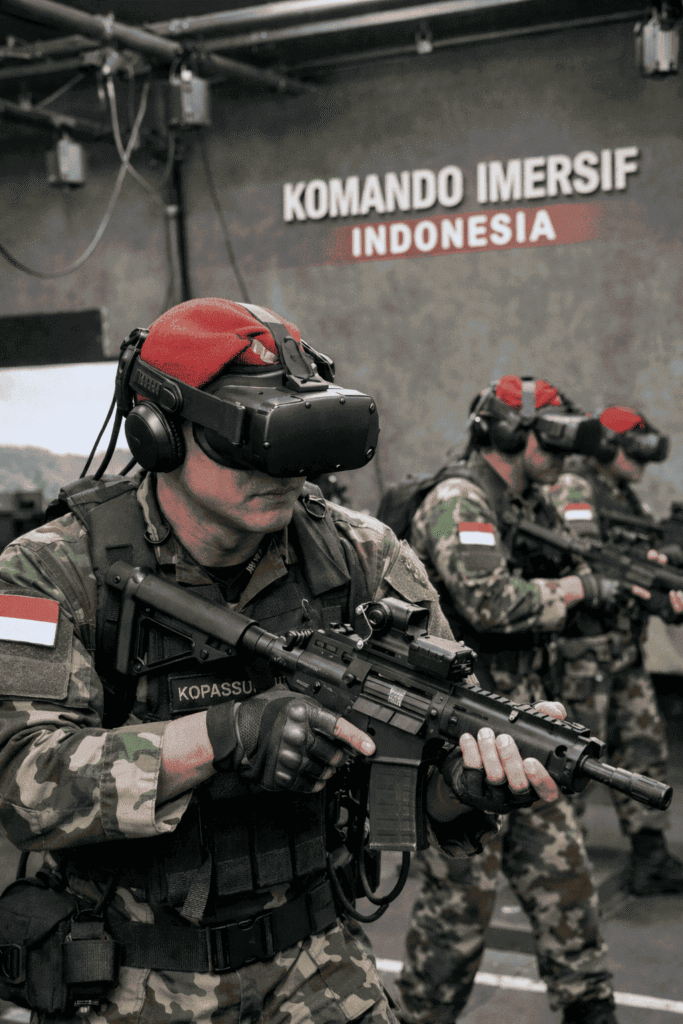
This is where VR Training has started to gain serious attention. Not as a trend, not as a showcase tool, but as a practical way to prepare teams for situations that are difficult, expensive, or dangerous to recreate in real life.
Still, skepticism is healthy in defense environments. Before adopting VR Training, commanders tend to ask the same hard questions. Below are six of them — asked in briefings, meetings, and closed-door discussions.
1. Does VR Training actually feel realistic, or is it just a simulation?
No training environment is identical to real operations. Live drills have limitations, and classroom sessions lack pressure. VR Training sits somewhere in between — and that is its strength.
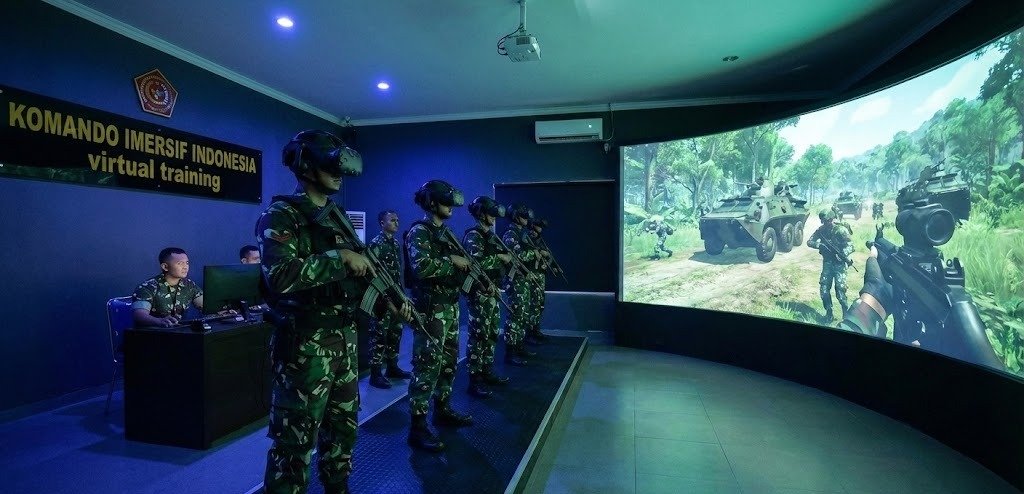
Modern VR scenarios can recreate operational environments with surprising accuracy. Terrain, visibility, movement constraints, and environmental stressors can all be controlled. While trainees know they are not in real danger, their brains respond to the situation as if they are. That response is what matters.
Realism, in this context, is not about visuals alone. It is about decision flow, timing, and consequence.
2. Can VR Training prepare personnel for stress, not just procedures?
Procedures are easy to memorize. Performing them under stress is the challenge.
VR Training allows commanders to expose personnel to controlled pressure repeatedly. Noise, urgency, unexpected events, and limited information can all be introduced into a scenario. Over time, trainees become familiar with operating under mental load.
This does not eliminate stress. It teaches people how to function despite it. That difference is critical in defense operations.
3. Is VR Training worth the cost compared to conventional training?
Traditional training is expensive for reasons everyone already understands: logistics, equipment usage, fuel, travel, safety measures, and time. These costs limit how often training can realistically take place.
VR Training shifts that equation. Once the system is in place, scenarios can be repeated without consuming physical resources. Adjustments can be made instantly. Mistakes can be made safely.
From a long-term perspective, VR Training is less about replacing existing methods and more about making training more frequent and accessible without multiplying costs.
4. Can VR Training be adapted to our specific mission profiles?
Defense units do not operate under identical conditions. A training solution that cannot adapt quickly becomes irrelevant.
VR Training environments are modular by design. Scenarios can be tailored to specific roles, locations, and operational objectives. Whether the focus is urban operations, disaster response, perimeter security, or coordination under limited visibility, simulations can be adjusted accordingly.
This flexibility allows training to stay aligned with real operational needs rather than generic assumptions.
5. How do we measure performance in VR Training?
One of the most practical advantages of VR Training is data.
Every action inside a virtual environment can be recorded. Reaction time, movement patterns, accuracy, communication flow, and decision sequences are all measurable. This provides commanders with objective insight rather than subjective impressions.
The result is clearer feedback, better debriefing sessions, and more targeted improvements in future training cycles.
6. Is VR Training secure enough for defense use?
Security concerns are valid — and necessary.
VR Training systems can be deployed within closed networks, offline infrastructures, and controlled facilities. Sensitive data does not need to leave the organization. With proper implementation, VR Training platforms can comply with internal security standards required by defense institutions.
The technology itself is flexible. Security depends on how it is deployed.
Why VR Training Is Becoming a Strategic Tool
VR Training is not designed to replace field exercises or operational experience. Its value lies in preparation, repetition, and controlled learning. It allows teams to practice scenarios that are difficult to organize, risky to execute, or too costly to repeat frequently.
For commanders focused on readiness rather than novelty, VR Training offers a practical advantage: better preparation with fewer constraints.
Why Komina
Komina develops VR Training solutions with a focus on operational relevance, realism, and measurable outcomes. The goal is not to impress with technology, but to support organizations that operate under pressure and responsibility.
By aligning virtual simulations with real operational needs, Komina helps defense teams train smarter, safer, and more effectively.
Contact Us
Are you ready to enhance the performance of your defence team? Contact us through the email or the phone number below:
Email: halo@komina.co
Phone/WhatsApp: +62 812 9696 7887
Address: Jl. Cikunir Raya No. 8, Kota Bekasi,
Jawa Barat 17422, Indonesia.
Website: www.komina.co